
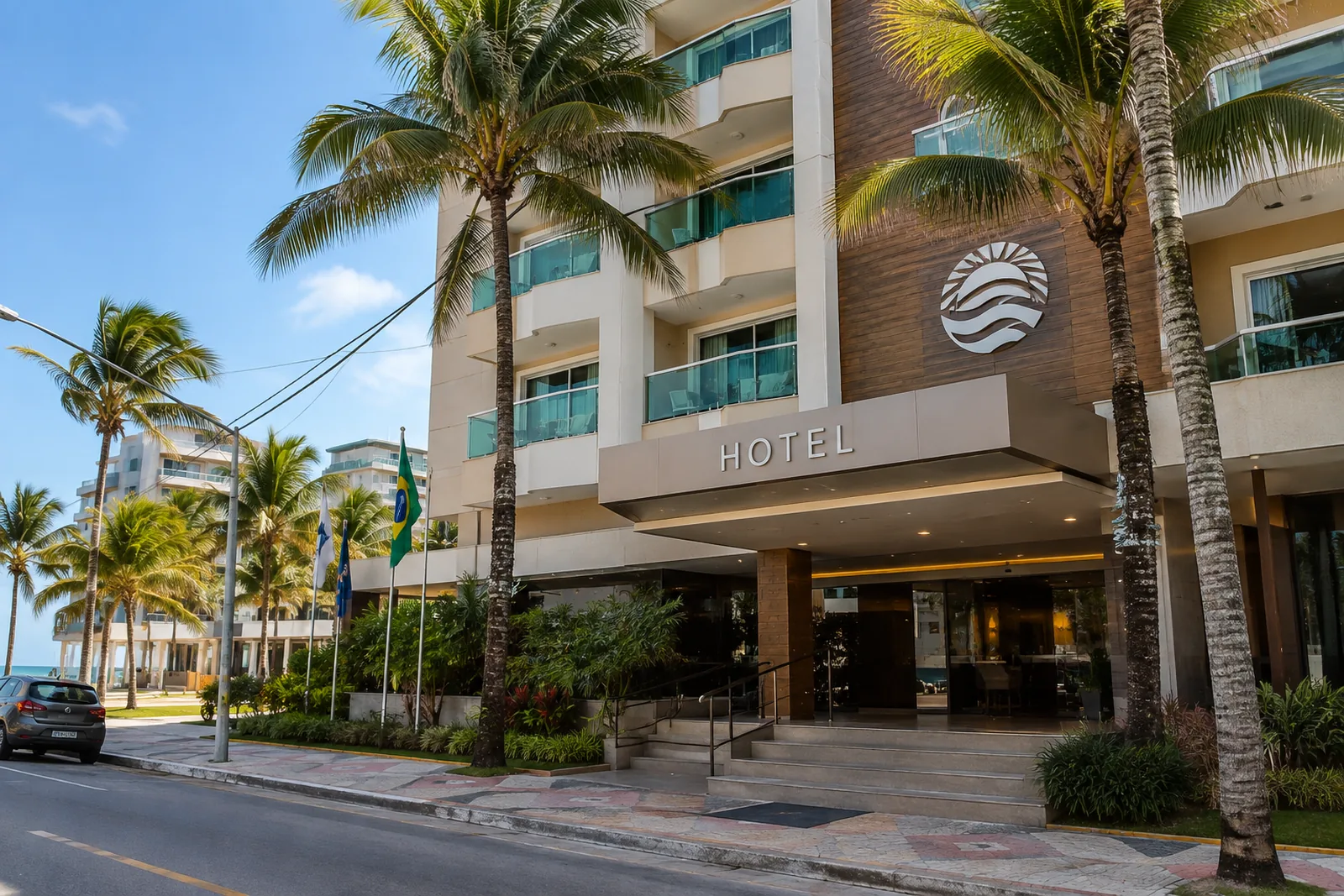
Hotel New Builds and Renovations
We plan the technology and security requirements for hotel renovation, expansion and new-build projects, treating technology as part of the construction from the start rather than something installed afterwards. If the technology project is already defined and you need someone to deliver it, see Technology Project Management.
From concept to stable operation
We take part in the full project cycle, so the technology is ready and tested when the hotel opens its doors.
Concept
Technology requirements gathered alongside the project brief, 12 to 18 months before opening.
Architecture and requirements
Cabling, the IT room and network segmentation defined alongside the architectural and engineering drawings.
Suppliers
Technical assessment and selection of infrastructure, network and systems suppliers for the property.
Installation by suppliers
Cabling, network and physical systems installed by suppliers and integrators in line with the construction schedule, with our oversight to avoid rework.
Integration
PMS, POS, booking engine, channel manager, electronic locks with mobile keys (keyless entry) and payment gateway connected to each other.
Testing and commissioning
Each system validated on its own and together, before the hotel depends on it.
Opening and follow-up
Close follow-up in the first weeks of operation, holding suppliers to the final adjustments based on real demand.
What's included
Joining a construction project late is expensive. We take part from planning through to post-handover validation, across the areas below.
Technical requirements
Technical and security requirements defined during the architecture and engineering phases, not after them.
Cabling and IT room
Structured cabling, fibre backbone and IT room (rack room) planned from the project drawings.
Segmentation by design
Guest Wi-Fi (in-house or managed by a third party), operations, PMS/POS and payment networks separated from the design stage, not fixed afterwards.
Critical integrations
Mapping the integrations between PMS, POS, booking engine, channel manager, keyless electronic locks and payment gateway.
Supplier assessment
Technical assessment of infrastructure, network and systems suppliers for the new property.
Redundant power and connectivity
Planning UPS units and redundant internet links, so a single failure does not stop operations.
Technology budget
Technology budget planning aligned with the construction schedule and payment stages.
IT schedule
An IT schedule synchronised with the construction phases, to avoid rework on cabling and installations already completed.
Delivery oversight
Oversight of work carried out by specialist suppliers and integrators.
Operational readiness before opening
Confirming the hotel is ready to operate before opening: systems and integrations tested, connectivity, staff devices and access, guest technology and support arrangements in place.
Wi-Fi coverage and capacity
Guest and operational Wi-Fi coverage and capacity designed on the floor plans, with room-by-room validation after installation.
Physical security systems
Specification of CCTV, access control and alarms integrated into the property's network from the design stage, alongside the other critical systems.
We recommend starting IT planning 12 to 18 months before opening, to keep pace with the construction schedule and design in from the start the network segmentation that reduces PCI DSS scope.
- IT technical specification for the project (cabling, network, IT room)
- Integration map for the property's critical systems
- IT schedule aligned with the construction phases
- Technology budget by project phase
- Oversight and post-handover validation report
Why this matters for your hotel
Renovating or building a hotel involves dozens of technology decisions that need to be made before construction starts: structured cabling, security systems, PMS, POS, guest Wi-Fi. Defining those requirements late, or without a plan, leads to expensive rework and delays: cables that have to be re-run, walls that have to be reopened and deadlines that slip.
We recommend starting IT planning 12 to 18 months before opening, so infrastructure decisions keep pace with the construction schedule instead of chasing it. That includes designing network segmentation (separating guest Wi-Fi, operations and payment systems) from the drawings onwards, which can reduce PCI DSS compliance scope and makes future audits simpler.
We help your hotel plan these requirements from the start, working with architects, engineers and suppliers, so the technology is ready and tested when the property opens.
Related reading
PCI DSS for hotels: a practical v4.0.1 guide for hotel operations
Hotels have one of the most complex PCI DSS scopes in retail: PMS, POS, booking engine and OTAs create multiple cardholder data environments with different requirements.
Read article
Cybersecurity risks most hotels have not yet addressed
The four attack surfaces that expose hotels most, and the security baseline the LGPD requires in practice.
Read article
Mobile keys and digital check-in: how keyless entry works
What to integrate before buying digital locks, and the security and LGPD precautions for a keyless entry project.
Read article
IT management for hotels
Ongoing management of your hotel's technology strategy, suppliers and evolution, from day-to-day operations to long-term planning.
View serviceFrequently asked questions about technology in new builds and renovations
What technology does a new hotel need before it opens?
Properly sized structured cabling and IT room, a network segmented between guests, operations and payments, two internet links and UPS, Wi-Fi with coverage tested room by room, a PMS integrated with the booking engine, channel manager, POS, payment gateway and electronic locks, cameras and access control on the right network, telephony, TV, and integration with FNRH Digital (Brazil's national digital guest registration). All of it tested together before the first booking, not on opening day.
When should technology planning start for a hotel under construction?
Between 12 and 18 months before opening, alongside the architectural and engineering design. Cabling, the IT room, network points and infrastructure routes need to be on the drawings before the walls are closed. When IT comes in later, the result is reopened walls, improvised cabling and a network that starts life without segmentation.
Is it still worth hiring HotelTI a few months before opening?
Yes, but with a different focus. Close to opening, some infrastructure decisions have already been made and fixing them costs more. Even so, it is possible to identify the critical risks, coordinate the suppliers and prioritise what must be resolved and tested before the first booking.
Which systems need to be ready and tested before opening?
The PMS with its integrations live (booking engine, channel manager, POS, gateway, locks and FNRH Digital), guest Wi-Fi with connection logs kept in line with Brazil's Marco Civil da Internet, backup with a tested restore, and every staff member's access set up with the correct profile. The test has to be end to end: a booking made on the website, paid for, with a key issued at check-in and a restaurant charge posted to the room. If that works, the hotel can open.
How should the network and Wi-Fi of a new hotel be planned?
With certified structured cabling and a fibre backbone between buildings, a network segmented from the design stage (guests, operations, PMS and payment, cameras and automation on separate networks), a Wi-Fi coverage study done on the drawings and validated after construction, and link and power redundancy for the core equipment. Guest Wi-Fi, whether in-house or managed by a third party, must keep connection logs for one year.
Who coordinates the technology suppliers during construction?
On many projects, nobody: the contractor handles the building, each supplier handles its own system and the integrations are left to the end. The missing role is a technology representative for the hotel, who consolidates requirements, aligns the IT schedule with the construction schedule, validates what each supplier delivers and makes the systems work together. That is the role we take on in this service. Installation and configuration stay with the suppliers.
How can a hotel's technology be renovated without stopping operations?
In phases, by wing or by floor, with the PMS and front desk always running. Core systems are switched over in low-occupancy windows, with the old system kept running in parallel until the switchover is validated. Each phase has a rollback plan in case something fails. What must not happen is the builders cutting the front desk network without warning, and the only way to avoid that is an IT schedule tied to the construction schedule.
Ready to plan the technology for your project?
Plan the technology before construction moves on, and avoid rework and extra cost. We work in English or Portuguese, Monday to Friday, 9:00 to 18:00 Brasília time.