
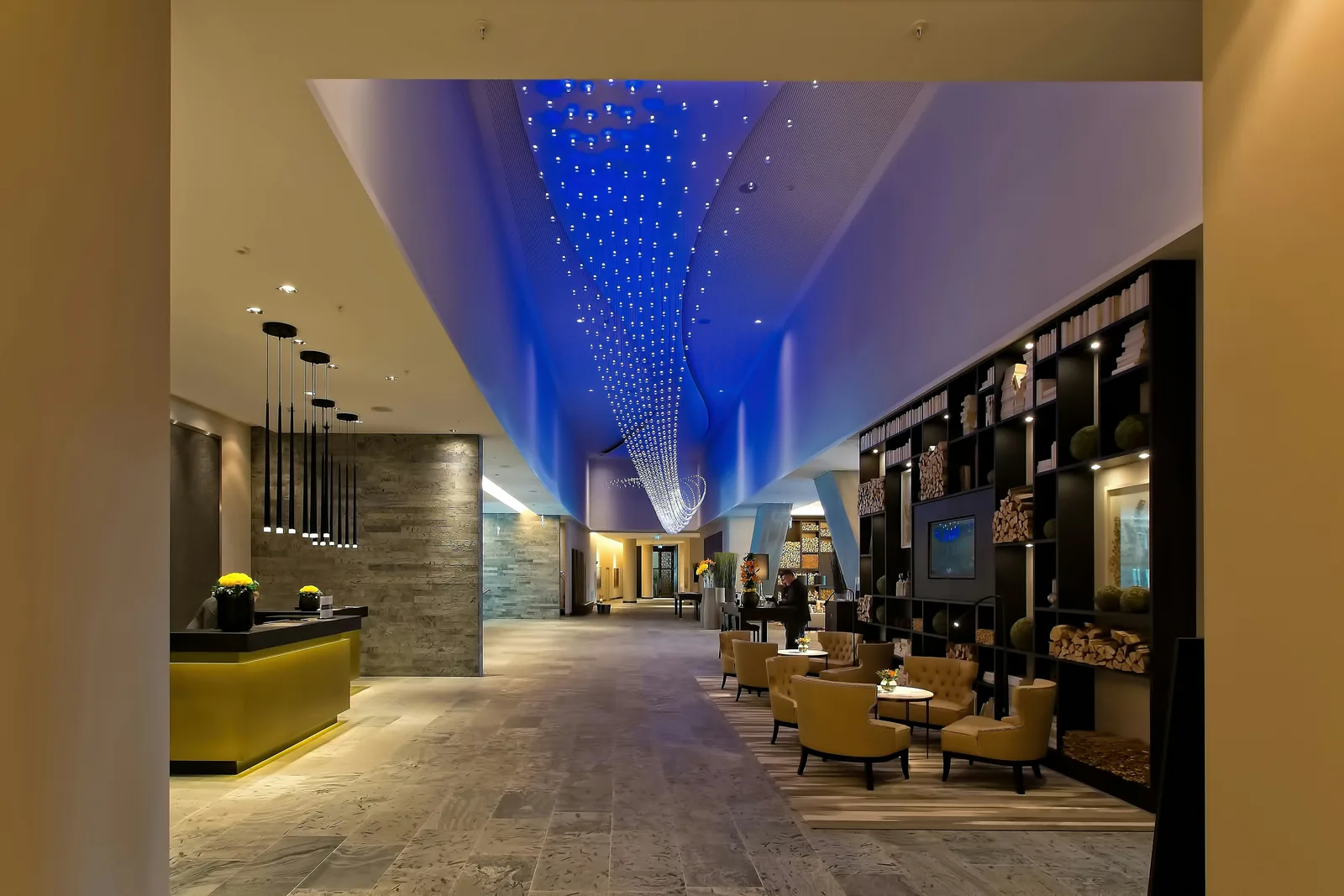
Hotel IT Management for Hotels and Resorts
Strategic planning, supplier management and technology modernisation for your hotel's operation.
What's included
There is no standard package: the work starts with an assessment and covers the areas below, to the extent each hotel needs. The goal is to turn reactive, fragmented IT into a well-managed operation, with clear priorities and strategy, stable systems, suppliers under control and an investment plan the leadership team can follow. Our role is governance and coordination: we set the standards and hold suppliers and the technical team to results.
Maturity assessment
We map the current infrastructure, systems, contracts and processes to identify gaps and risks before any investment is made, using ISO 27001, NIST and ITIL as a reference.
Roadmap and budget
A technology roadmap tied to the hotel's growth targets and budget, covering infrastructure, systems, cloud and AI, with investments prioritised by impact and risk and an estimated cost for each initiative.
Migration and modernisation
Legacy systems slow the operation down and increase risk. We plan the move to current platforms and coordinate data migration, parallel running and handover, with minimal impact on operations and guests.
Governance and reporting
Documented policies and clear roles so the IT team works consistently, and a regular executive report for management: roadmap progress, supplier performance, budget, risks and upcoming decisions.
Suppliers and contracts
We consolidate suppliers where it makes sense, review contracts and SLAs before every renewal and hold suppliers to their service levels, with no automatic renewals that nobody questions any more.
Service desk and ITSM
ITIL-aligned support processes with documented SLAs, clear priorities and escalation, so the in-house team or the support provider resolves every request predictably and measurably.
Microsoft 365 and collaboration
We review licences, security configuration, email, Teams and SharePoint in Microsoft 365 (or Google Workspace) and set the administration standards the responsible supplier applies.
Network and cloud
We set configuration standards and track the performance of internet links, firewalls, switches, servers and cloud environments, holding suppliers to account for the availability of the systems that run the operation.
Patches and vulnerabilities
We set up an update programme for servers, workstations and network equipment, with prior testing and regular vulnerability scans, and follow every fix through with the technical owners.
Backup and recovery
We set recovery time and recovery point targets (RTO and RPO), require immutable copies and hold suppliers to regular restore tests, so the backup works when it is needed.
Assets and devices
An inventory of hardware, software and cloud resources, with lifecycle and replacement planning, and policies for the computers, tablets and phones used by staff (MDM).
Procurement and licences
We support the specification, quoting and negotiation of hardware, software and cloud services, and audit licences so the hotel does not pay for what it does not use.
Why hotel IT needs direction
Many hotels run on technology accumulated over the years, without a clear strategic view. Specialist IT management identifies where to invest, where to save and how to prepare the operation for the years ahead.
Where hotel IT usually falls behind
- Infrastructure that grew piece by piece, without a planned architecture
- A single person holds critical knowledge, with no documentation
- Supplier contracts renewed automatically, without review
- No medium-term investment roadmap
- Technology decisions made in isolation by each department (front desk, F&B, maintenance)
- Backup and business continuity that have never been tested in practice
How it works
- Assessment: we map your hotel's current infrastructure, systems, contracts and IT processes.
- Roadmap: we prioritise actions by impact and urgency, with a timeline and estimated budget for each.
- Follow-through: we support delivery, coordinating suppliers and adjusting the plan as the operation evolves.
- Assessment report on infrastructure and technology maturity
- Prioritised IT roadmap, with timeline and estimated budget
- Inventory of technology contracts and suppliers
- Documented IT policies and processes
- Modernisation recommendations by area (infrastructure, systems, security)
Why HotelTI
- Hospitality specialists: experience with hotels in Europe and Brazil, and with brands such as Marriott, Hilton, Radisson and Kempinski. We understand how the PMS, POS, Wi-Fi and suppliers fit together in a hotel's operation.
- Independent: we do not resell software or hold agreements with specific suppliers, so every recommendation starts from what the hotel needs.
- Senior-led: every engagement is led by a senior consultant.
- Standards-based work: assessments and plans follow ISO 27001, NIST and ITIL, so the work is consistent and comparable over time.
- Visible results: regular reports show the leadership team progress, risks, costs and supplier performance.
- Portuguese or English: we work and report in your team's language.
Need someone in the IT manager role?
When the hotel has no IT manager, or needs to cover a departure or a period of change, the Virtual IT Manager takes on the role directly, in two formats:
Interim. To cover an IT manager's departure, a migration in progress or a project that needs senior ownership.
Fractional. Dedicated days every month to manage the IT roadmap, supplier relationships and review meetings, without the commitment of a full-time salary.
Related articles (in Portuguese)

How much does hotel IT cost? A guide to budget and priorities
The five blocks that make up a hotel's IT budget and how to prioritise each one for the size of your operation.
Read article
IT consultant vs MSP for hotels: which model your hotel really needs
An MSP and an IT consultant solve different problems for a hotel. The differences between the two models, when each makes sense, and why many hotels need both at once.
Read article
How to manage hotel IT suppliers without being held hostage by any of them
PMS, POS, connectivity, MSP and security: how to map, assess and review your hotel's technology suppliers, and the warning signs that cost you in the contract.
Read article
How to cut software licence costs at a hotel
Licences for former staff, contracts that renew themselves and overlapping tools inflate the IT budget. How to audit and cut the waste.
Read articleFrequently asked questions about hotel IT management
Who can manage a hotel's IT?
There are three models: an employed IT manager, a managed service provider (MSP) that takes on the technical operation, or a governance consultancy that sets priorities, budget and standards and coordinates the suppliers who deliver. Mid-sized independent hotels rarely have enough volume to justify a full-time manager, and an MSP, by its nature, does not question its own scope. HotelTI works in the third model.
Does a small or mid-sized hotel need an IT manager?
It needs someone responsible for technology decisions, not necessarily a full-time role. Without that role, decisions are made by each system's supplier, each looking only at its own part. A part-time virtual IT manager covers planning, budgeting and holding suppliers to account for a fraction of the cost of a hire.
What does a hotel IT manager do?
Keeps the inventory of systems and contracts, sets the technology roadmap and budget, establishes the security baseline, makes sure backup and continuity are tested, negotiates with and manages suppliers, and answers for IT to the leadership team. Day-to-day technical support (replacing equipment, resolving tickets, configuring the network) is the job of the support team or MSP, not the manager.
Where should a hotel start when organising its IT?
With an assessment: an inventory of systems, contracts, integrations and access, a real backup restore test and a review of who has access to what. This exercise usually uncovers automatic renewals for things nobody uses, former employees' accounts that are still active and integrations nobody knows who maintains. Only after that does it make sense to decide where to invest.
How should a hotel build its IT budget?
Start from the contract inventory and separate recurring costs (licences, internet links, support, cloud) from one-off projects (a PMS change, a network refresh, building work). Then rank each item by risk and impact on operations, and set a hardware replacement cycle to avoid surprises.
Does HotelTI provide day-to-day technical support?
No. Our work is governance: assessment, planning, budgeting, standards and coordination of the suppliers and technical team who deliver. If the hotel has nobody to do the hands-on work, we help select and contract an MSP or a support professional, and then monitor how that contract performs.
Ready to plan the next steps for your IT?
Tell us about your operation today and get a prioritised action plan. We work in English or Portuguese, Monday to Friday, 9:00 to 18:00 Brasília time.